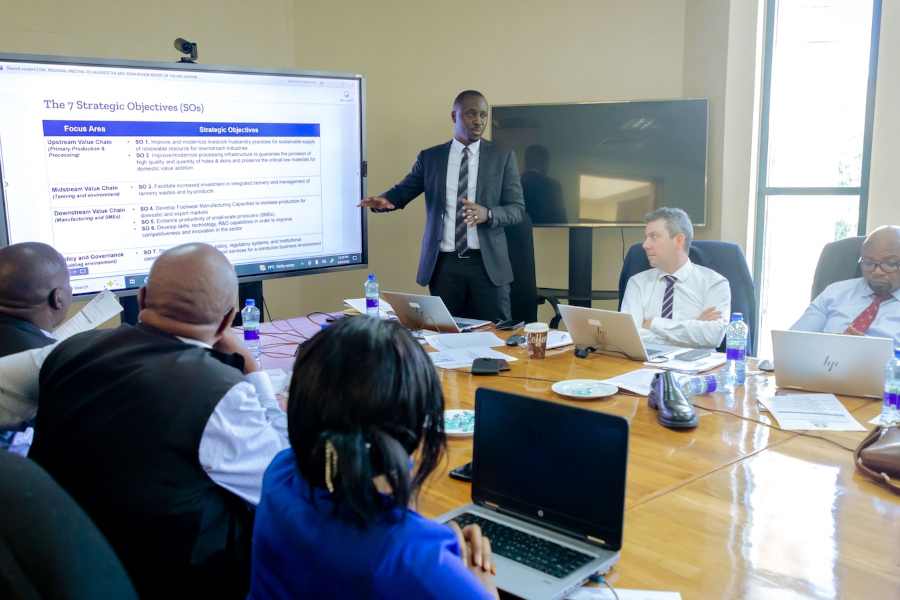
The EAC met in Arusha for the Mid-Term Review of the Leather and Leather Products Strategy (2020–2030) and to agree on priorities to strengthen the sector.
The meeting brought together EAC Partner States, regional institutions, private sector organizations, development partners, and technical experts. They reviewed progress, addressed bottlenecks, and agreed on strategic priorities.
The Midterm Review, undertaken by the EAC Secretariat with ITC technical support, responds to directives of the 40th Extraordinary Sectoral Council on Trade, Industry, Finance, and Investment (SCTIFI), held on 24 May 2025. That meeting called for an assessment of the Strategy’s implementation and the identification of urgent policy measures to revitalize the sector.
'The Mid-Term Review offers us a timely opportunity to recalibrate our efforts and seize the growing demand for leather products through value addition, stronger policy support, and enhanced production capacity across the EAC region,' said Flavia Busingye, Director of Customs and Agricultural Trade at the EAC Secretariat.
The objectives were to review the key findings of the Review, including implementation progress across Partner States, global and regional market performance and value chain dynamics. The discussions also focused on identifying and confirming key policy, regulatory, and institutional bottlenecks affecting the leather sector development and competitiveness. The meeting noted the relevance of the EAC Leather Strategy (2020–2030) in increasing the sector’s contribution to industrialization, export growth, and job creation.
The validated report will be submitted to the EAC Statutory Organs for consideration and policy guidance to support effective implementation during the remaining period of the Strategy.
The EU–EAC MARKUP II Programme continues to demonstrate the importance of public and private sector collaboration in reducing trade barriers, addressing market constraints, and building resilience in the region’s leather value chains.