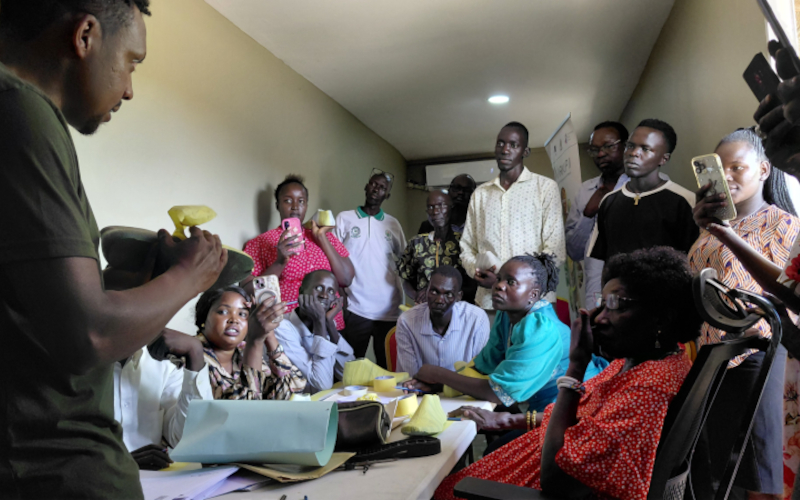
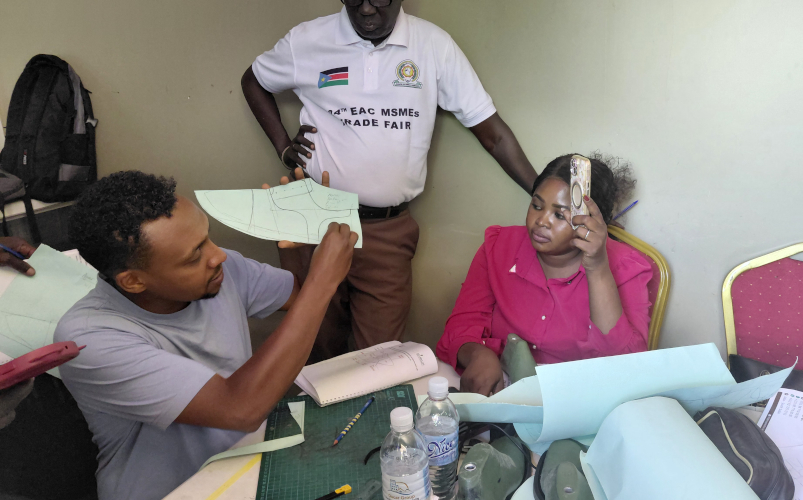
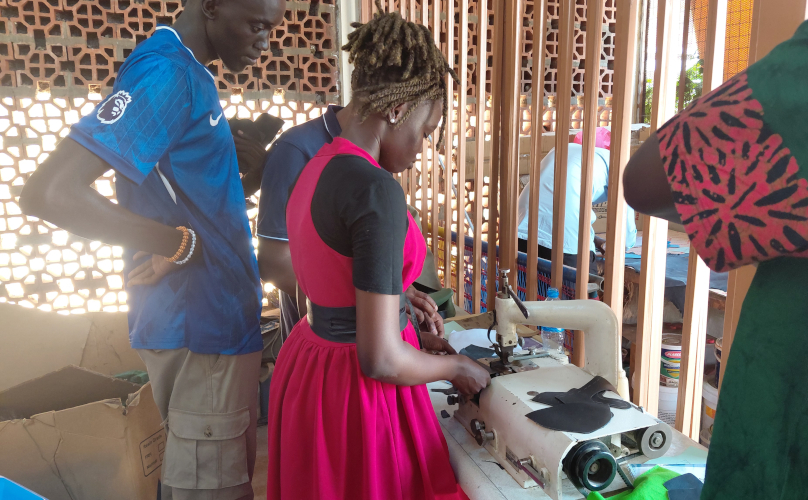
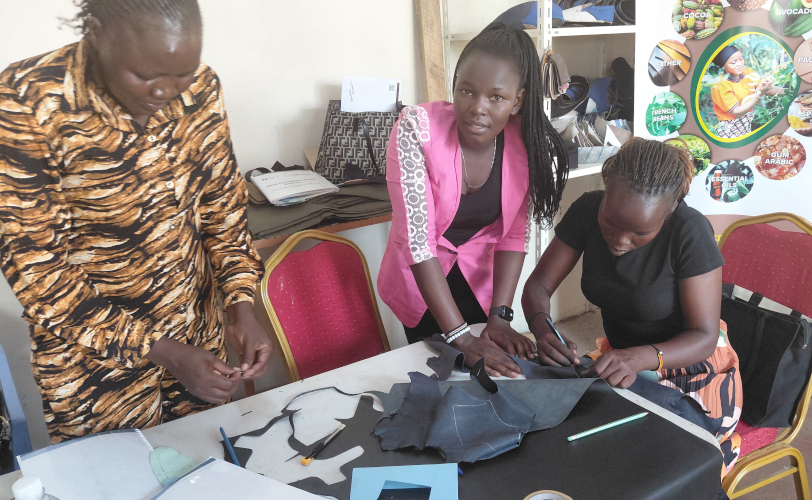
"The training has improved my skills in cutting, stitching, and sole attachment. I can now produce quality shoes that can compete in the local market," said Khamis Samuel.
And, describing her experience Asunta William added, "Before this training, I had no idea about producing shoes, but in just three days, I mastered the concept and was able to produce a shoe on the fourth day. Now I understand proper measurement and finishing techniques."
Khamis and Asunta were among 27 participants from various leather companies in South Sudan, the majority of whom were young female university graduates seeking practical skills and sustainable livelihood opportunities. For many, this was their first formal technical training in footwear production.
Designed to be highly hands-on, the training focused on the seven foundational footwear styles:
-
Derby
-
Oxford
-
Court Shoe
-
Pantopola
-
Moccasin
-
Sandals
-
Boot
European Union Delegation visits Mayo Leather Company
Mayo Leather Company hosted the training and is supported by EU–EAC MARKUP II. It is the only established leather SME in South Sudan with a workshop equipped with basic footwear machinery.
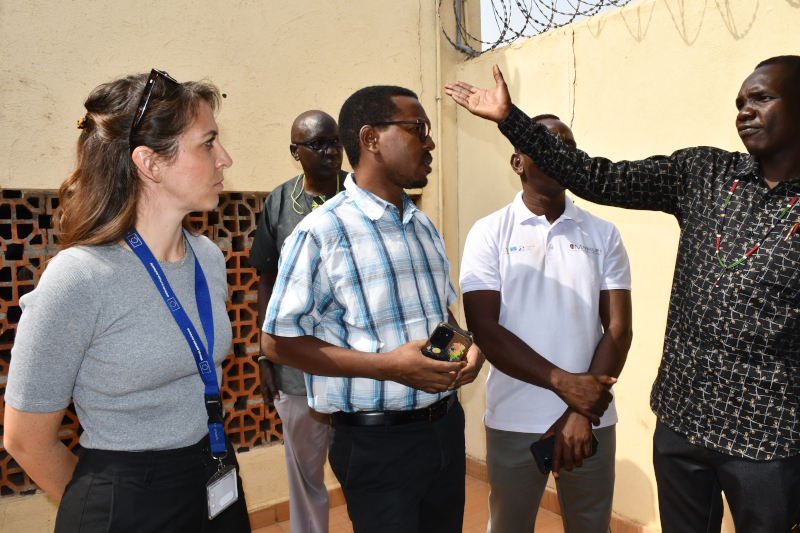
The European Union (EU), which funds the EU-EAC MARKUP II Programme, visited the footwear training in action. The EUD to South Sudan representatives interacted directly with participants and witnessed the production process firsthand, observing how trainees transformed raw materials into finished shoes through hands-on learning.
This initiative supports young people and women in South Sudan by providing practical skills, creating livelihood opportunities, and strengthening the local leather industry.
Why is this training important for South Sudanese Youth?
By the end of the programme, participants had successfully manufactured seven finished shoes, applying skills in cutting, stitching, sole attachment, measurement, and finishing techniques. Government representatives described the initiative as the first technical training of its kind in South Sudan’s leather sector.
During the opening and closing sessions, speakers emphasized that the MARKUP II Programme has unlocked participants’ potential through practical learning and encouraged them to apply their skills productively to strengthen the country’s leather industry.
Participants expressed strong satisfaction with the training, describing it as practical, relevant, and directly aligned with local market needs. Many highlighted the balance between theory and production sessions as a key strength. They also called for continued support in accessing start-up capital, modern machinery, and market linkages to scale production and create opportunities for other youth in their communities.